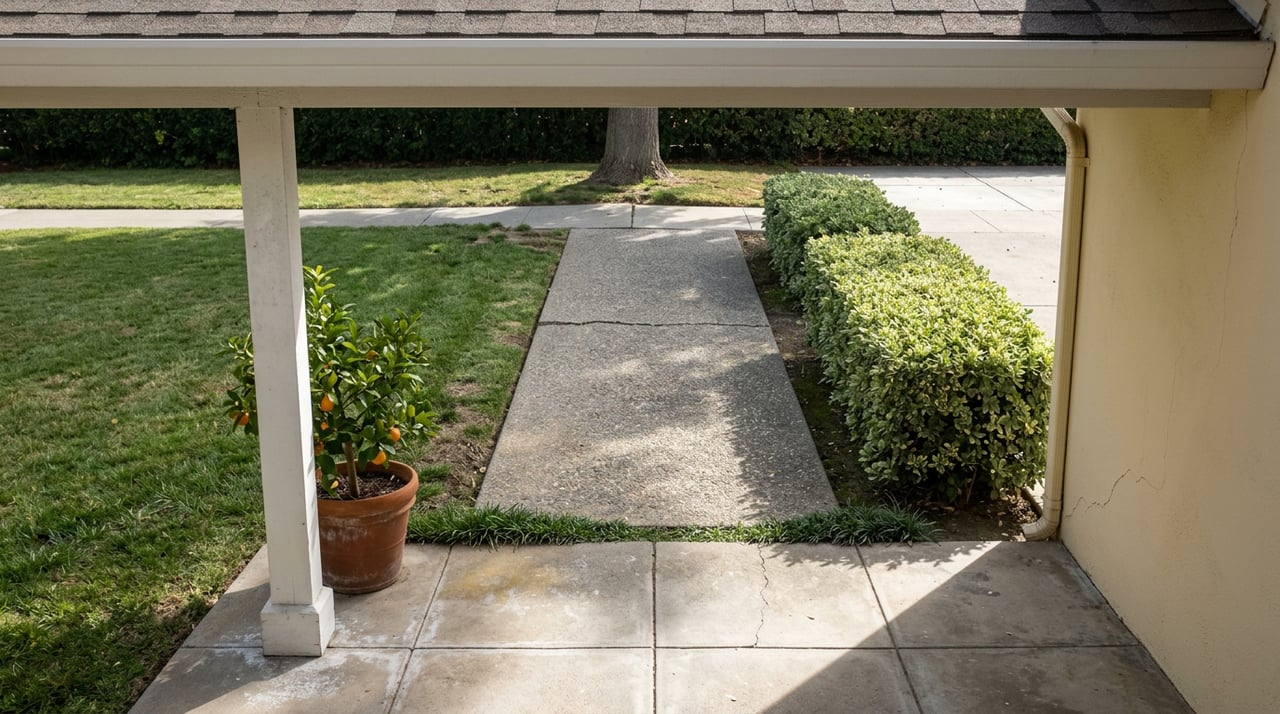
If you've driven down E Street in downtown Lemoore any time in the last year, you've probably noticed something felt unfinished. Not run-down. Not neglected. Just caught mid-sentence, like a sign that's half hung.
That's because it has been. In September 2025, the city announced it would close a stretch of E Street between Follett and Heinlen to cars entirely, replace the asphalt with a walkable corridor of trees, lighting and outdoor seating, and turn what City Manager Marissa Trejo called a "reimagined entertainment district" into the anchor of downtown. The Hanford Sentinel reported the city council had already agreed to move forward and expected the work done in four to six weeks.
That was almost a year ago. The corridor didn't open with a ribbon cutting. It opened in pieces, through events and storefronts that landed on E Street one at a time, and the city's own planned launch moment fell through before any of it happened. If you've been waiting for an announcement that says the street is finished, you're going to keep waiting. The way to actually track what's happening on E Street is to watch what shows up there, not for the city to declare victory.
What the City Actually Promised
The original plan was specific enough to picture. Cars banned outright. A five-screen movie theater, the Lemoore Stadium Cinema, anchoring one end. A new restaurant called Miguel's Flaming Grill anchoring the other, built on a city-owned lot near the park. In between:
- Street trees and new landscaping where there had been none
- Public art and night lighting along the full block
- A narrowed streetscape designed for people standing still, not cars passing through
- Shade structures to cover a corridor that previously had none for the hottest months
The theater's new manager was already planning to invite food trucks to park nearby and bring beer and wine into the theater itself, according to the same Sentinel report. On paper, it read like a single coordinated build-out. In practice, the pieces arrived on separate timelines, and some of them are still arriving.
The Kickoff That Didn't Happen
Here's the detail that tells you the most about how this actually played out. According to downtownlemoore.com's own account of the project, the city had planned to use the NAS Lemoore Airshow afterparty as the official launch of the new E Street event space. That event was canceled. Instead, the corridor's real debut became the city's inaugural Fourth of July Block Party in 2026, held on E Street between Fox and Follett from 4 to 10 p.m., with live music, local vendors, a free Kid's Zone with a trackless train and face painting, plus the splash pad and skatepark running alongside it, as the Sentinel confirmed.
That's not a small distinction. A ribbon cutting is a city telling you a project is done. A block party that becomes the launch only after the planned event fell apart is closer to a real test: does the street hold a crowd when nobody staged it that way on purpose. For residents, it means the honest read on whether E Street works isn't coming from a press release. It's coming from whether people actually showed up and whether they came back.
They apparently did, because by March 2026 the corridor was hosting FlightFest, a three-day event with vendor booths running Friday through Sunday, according to the event listing posted for the weekend. Between FlightFest in March and the Block Party in July, E Street had two organized reasons to close to cars before most of the physical build-out was even finished.
The Businesses That Didn't Wait
While the street itself was still being figured out, storefronts kept opening around it on their own schedule. In December 2025, Rebecca McClellan and her mother, Ella Dodson, opened Rebecca's Recuerdos, a vintage collectible shop, at 329 Heinlen St., a block that sits right at the edge of the new corridor. McClellan told the Sentinel she'd been looking for a storefront after years spent raising her grandchildren, and found the space by accident, driving past a for-rent sign with no phone number on it. That's a small story, but it's the kind of small story that tells you what downtown Lemoore actually runs on: independent owners taking a chance on a specific address, not a developer executing a master plan.
Downtown Lemoore's own directory counts more than 105 independently owned and operated businesses inside the district, a mix of dining, retail, salons and services that existed well before anyone proposed closing a street to cars. The E Street project didn't create downtown Lemoore. It's trying to give an already-dense business district a shared public space to match.
Why the Street Matters Beyond the Renderings
Part of what makes this worth paying attention to, if you live here, is that E Street and D Street aren't new to being the center of things. According to the history downtownlemoore.com has documented, Dr. Lee Moore surveyed the original townsite in 1872, and everything changed again in 1877 when the railroad arrived and pulled business activity toward the tracks. E Street sat right alongside those tracks and became one of the town's first commercial corridors, with D Street growing up immediately to its west. The current push to close E Street to cars and reopen it to people is, in a sense, the third version of the same street. First it served trains. Then it served cars. Now the city is betting it can serve neither and hold a crowd anyway.
If you want the fuller version of that history, the Historic Downtown Lemoore Walking Tour runs along D Street and E Street and is self-guided, and the Sarah A. Mooney Memorial Museum has preserved the artifacts and photographs behind it for nearly fifty years. Worth doing on a weekend when the corridor isn't hosting an event, if only to see what the street looked like before anyone tried to reinvent it.
How to Actually Keep Up With It
Given that the project has moved in bursts rather than in a straight line, the most reliable way to track E Street's progress isn't to wait for a city announcement that says it's complete. It's to watch the downtown events calendar directly, where the next block party, market or seasonal event tends to show up before the physical changes catch up to it. The merchant directory is the other place worth bookmarking, since new storefronts like Rebecca's Recuerdos tend to open quietly, without the fanfare a city project gets.
Downtown Lemoore isn't finished changing. It's been changing in increments since last September, and the honest way to understand where it stands right now is to notice what's actually open on E Street this month, not what was promised for it last fall.
If you're keeping an eye on what's happening in Kings County, whether that's downtown Lemoore or the broader Hanford and Visalia area, I'd be glad to talk through what it means for property values, timing or anything else on your mind. Sean Harper has spent nearly two decades working Central Valley real estate and financing, and Let's Connect is always the easiest next step.
